
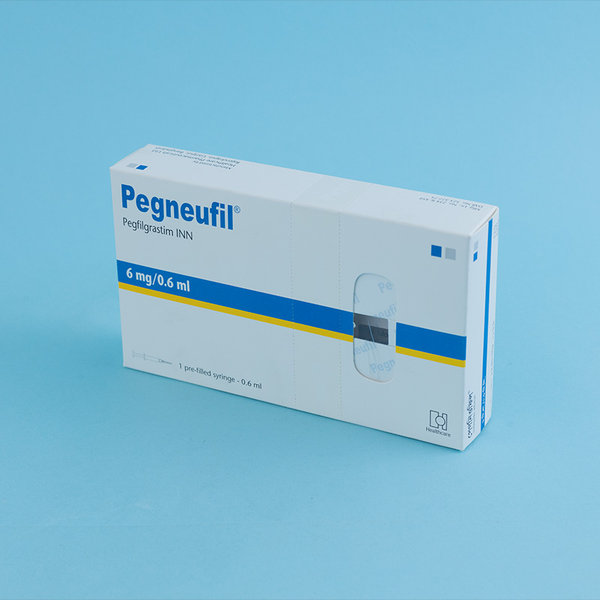
PegNeufil
 Generic: Pegfilgrastim [Pegylated Filgrastim]
 Daily Dose:
 Course Duration:
 Alternatives (3)
Cheaper & Alternative Brands (6 mg/0.6 ml)
Same active generic (Pegfilgrastim [Pegylated Filgrastim]), same form (SC Injection), exact same strength (6 mg/0.6 ml)
Clinical Prescribing Information
Medical monograph and safety information for healthcare professionals & patients.Indications & Clinical Uses
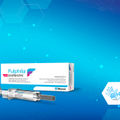
Fulphila is a leukocyte growth factor indicated to decrease the incidence of infection, as manifested by febrile neutropenia, in patients with non-myeloid malignancies receiving myelosuppressive anti-cancer drugs associated with a clinically significant incidence of febrile neutropenia.
Dosage & Administration
The recommended dosage of Pegfilgrastim is a single subcutaneous injection of 6 mg administered once per chemotherapy cycle in adults. Do not administer Pegfilgrastim between 14 days before and 24 hours after administration of cytotoxic chemotherapy. Visually inspect parenteral drug products for particulate matter and discoloration prior to administration, whenever solution and container permit. Do not administer Pegfilgrastim if discoloration or particulates are observed.
NOTE: The needle cover on the single-use pre-filled syringe contains dry natural rubber (latex); persons with latex allergies should not administer this product.
Contraindications
Do not administer Pegfilgrastim to patients with a history of serious allergic reactions to pegfilgrastim or filgrastim.
Side Effects & Adverse Reactions
Splenic Rupture
: Splenic rupture, including fatal cases, can occur following the administration of Fulphila. Evaluate for an enlarged spleen or splenic rupture in patients who report left upper abdominal or shoulder pain after receiving Fulphila.
Acute Respiratory Distress Syndrome
: Acute Respiratory Distress Syndrome (ARDS) can occur in patients receiving Fulphila. Evaluate patients who develop fever and lung infiltrates or respiratory distress after receiving Fulphila for ARDS. Discontinue Fulphila in patients with ARDS.
Serious Allergic Reactions
: Serious allergic reactions, including anaphylaxis can occur in patients receiving Fulphila. The majority of reported events occurred upon initial exposure. Allergic reactions, including anaphylaxis can recur within days after the discontinuation of initial anti-allergic treatment. Permanently discontinue Fulphila in patients: with serious allergic reactions. Do not administer Fulphila to patients with a history of serious allergic reactions to Fulphila or Filgrastim.
Patients with Sickle Cell Disorders
: Severe sickle cell crises can occur in patients with sickle cell disorders receiving Fulphila. Severe and sometimes fatal sickle cell crises can occur in patients with sickle cell disorders receiving Filgrastim, the parent compound of Fulphila.
Warnings & Precautions
Fatal splenic rupture can occur. Evaluate for splenomegaly or splenic rupture in patients with left upper abdominal or shoulder pain.
Acute Respiratory Distress Syndrome (ARDS) can occur. Evaluate for ARDS in patients who develop fever, lung infiltrates, or respiratory distress. Discontinue Fulphila in patients with ARDS.
Serious allergic reactions, including anaphylaxis, can occur. Permanently discontinue Fulphila in patients with serious allergic reactions.
Pharmacology & Mechanism of Action
Pegfilgrastim, a Granulocyte Colony-Stimulating Factor (G-CSF) is a pegylated glycoprotein that regulates the production and release of functional neutrophils from bone marrow. Pegfilgrastim is a covalent conjugate of recombinant methionyl human G-CSF (Filgrastim) and monomethoxy polyethylene glycol. Filgrastim is a water soluble 175 amino acid protein with a molecular weight of approximately 19 kilodaltons (kD) and a 20 kD monomethoxy polyethylene glycol molecule is covalently bound to the N-terminal methionyl residue of filgrastim. The average molecular weight of pegfilgrastim is approximately 39 kD.