

P-caine
 Generic: Proparacaine Hydrochloride
 Dose Regimen:
 Course Duration:
 Alternatives (1)
Cheaper & Alternative Brands (0.5%)
Same active generic (Proparacaine Hydrochloride), same form (Ophthalmic Solution), exact same strength (0.5%)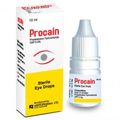
Clinical Prescribing Information
Medical monograph and safety information for healthcare professionals & patients.Indications & Clinical Uses
P-caine sterile eye drops is indicated for procedures in which a topical ophthalmic anesthetic is indicated: corneal anesthesia of short duration, e.g., tonometry, gonioscopy, removal of corneal foreign bodies, and for short corneal and conjunctival procedures.
Dosage & Administration
Deep anesthesia as in cataract extraction
: Instill 1 drop to the eye every 5 to 10 minutes for 5 to 7 doses.
Removal of sutures
: Instill 1 or 2 drops to the eye 2 or 3 minutes before removal of stitches.
Removal of foreign bodies
: Instill 1 or 2 drops to the eye prior to operating.
Tonometry
: Instill 1 or 2 drops to the eye immediately before measurement.
Contraindications
Proparacaine Hydrochloride sterile eye drops should be considered contraindicated in patients with known hypersensitivity to any of the ingredients of this preparation.
Side Effects & Adverse Reactions
Occasional temporary stinging, burning, and conjunctival redness may occur with the use of proparacaine. A rare, severe, immediate-type, apparently hyperallergic corneal reaction, characterized by acute, intense and diffuse epithelial keratitis, a gray, ground glass appearance, sloughing of large areas of necrotic epithelium, corneal filaments and sometimes, iritis with descemetitis has been reported.
Warnings & Precautions
Prolonged use of a topical ocular anesthetic is not recommended. It may produce permanent corneal opacification with accompanying visual loss.
Pharmacology & Mechanism of Action
The main site of anesthetic action is the nerve cell membrane where proparacaine interferes with the large transient increase in the membrane permeability to sodium ions that is normally produced by a slight depolarization of the membrane. As the anesthetic action progressively develops in a nerve, the threshold for electrical stimulation gradually increases and the safety factor for conduction decreases; when this action is sufficiently well developed, block of conduction is produced. Several studies indicate that local anesthetics may limit sodium ion permeability by closing the pores through which the ions migrate in the lipid layer of the nerve cell membrane.