
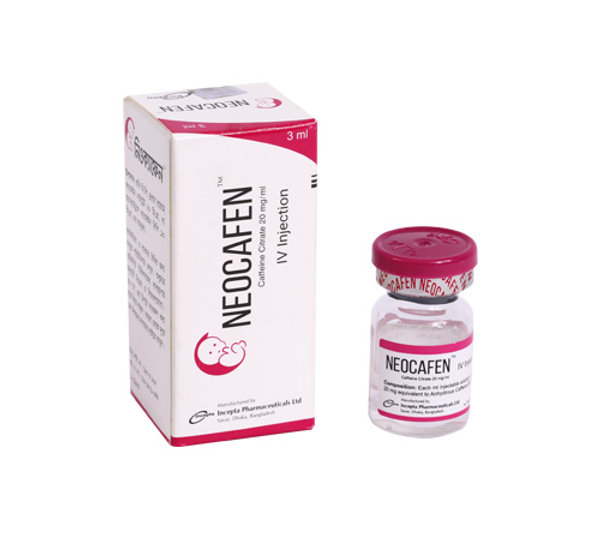
Neocafen
 Generic: Caffeine Citrate
 Daily Dose:
 Course Duration:
Cheaper & Alternative Brands (20 mg/ml)
Same active generic (Caffeine Citrate), same form (IV Injection), exact same strength (20 mg/ml)No other brands currently registered with this exact active generic and dosage form.
Clinical Prescribing Information
Medical monograph and safety information for healthcare professionals & patients.Indications & Clinical Uses
Neocafen is indicated for the treatment of apnea of prematurity.
Dosage & Administration
Loading Dose
: Dose of Caffeine Citrate-20 mg/kg. Route-Intravenous infusion (over 30 minutes) by using a syringe infusion pump. Frequency- One Time.
Maintenance Dose
: Dose of Caffeine Citrate-5 mg/kg. Route-Intravenous infusion (over 10 minutes) by using a syringe infusion pump. Frequency-Every 24 hours (beginning 24 hours after the loading dose).
The duration of treatment of apnea of prematurity in the clinical trial was limited to 10 to 12 days. The safety and efficacy of caffeine citrate for longer periods of treatment have not been established. Vials containing visible particulate matter should be discarded. For single use only. Any unused solution should be discarded.
Side Effects & Adverse Reactions
Few cases of sepsis, hemorrhage, necrotizing enterocolitis, gastritis, gastrointestinal hemorrhage, acidosis, cerebral hemorrhage, dyspnea, lung edema, dry skin, rash, skin breakdown, kidney failure were reported.
Warnings & Precautions
Neocafen should be used with caution in infants with seizure disorders, cardiovascular disease and impaired renal or hepatic function. Serum concentrations of caffeine should be monitored and dose administration of Neocafen should be adjusted to avoid toxicity in this population.
Pharmacology & Mechanism of Action
Caffeine is structurally related to other methylxanthines, theophylline and theobromine. It is a bronchial smooth muscle relaxant, a CNS stimulant, a cardiac muscle stimulant and a diuretic. Although the mechanism of action of caffeine in apnea of prematurity is not known, several mechanisms have been hypothesized. These include:
stimulation of the respiratory center,
increased minute ventilation,
the decreased threshold to hypercapnia,
increased response to hypercapnia,
increased skeletal muscle tone,
decreased diaphragmatic fatigue,
increased metabolic rate,
increased oxygen consumption.
Most of these effects have been attributed to antagonism of adenosine receptors, both A1 and A2 subtypes, by caffeine