
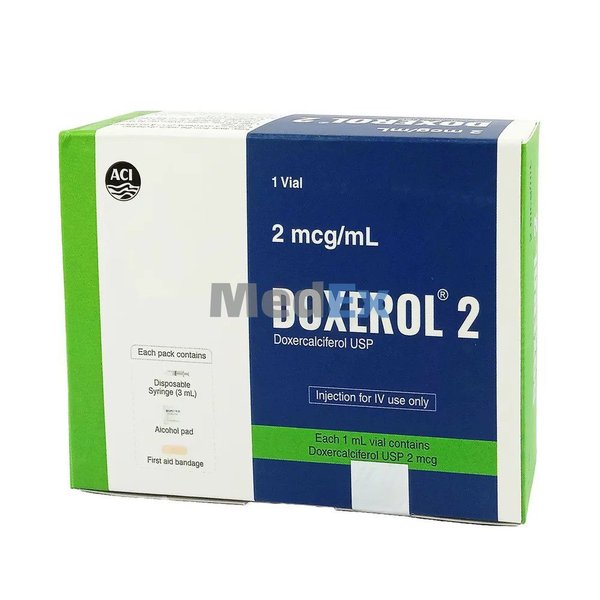
Doxerol
 Generic: Doxercalciferol
 Daily Dose:
 Course Duration:
Cheaper & Alternative Brands (2 mcg/ml)
Same active generic (Doxercalciferol), same form (IV Injection), exact same strength (2 mcg/ml)No other brands are currently registered in Bangladesh for the 2 mcg/ml presentation. Below are available brands for Doxercalciferol in other strengths:
Clinical Prescribing Information
Medical monograph and safety information for healthcare professionals & patients.Indications & Clinical Uses
Doxerol injection is indicated for the treatment of secondary hyperparathyroidism in adult patients with CKD on dialysis.
Dosage & Administration
Route of administration
: Doxercalciferol injection should be administered intravenously. Ensure serum calcium is not above the upper limit of normal before initiating treatment with Doxercalciferol injection.
Administration instructions
:
Administer Doxercalciferol injection intravenously as a bolus dose at the end of dialysis.
Inspect Doxercalciferol injection visually prior to administration; the solution should appear clear and colorless. Do not use if the solution is not clear or particles are present.
Dosage recommendations
:
Initiate Doxercalciferol injection at a dose of 4 meg given by bolus intravenous administration three times weekly at the end of dialysis (no more frequently than every other day).
Target the maintenance dose of Doxercalciferol to intact parathyroid hormone (PTH) levels within the desired therapeutic range and serum calcium within normal limits.
Monitor serum calcium, phosphorus and intact PTH levels weekly after initiation of therapy or dose adjustment.
Titrate the dose of Doxercalciferol injection based on intact PTH. The dose may be increased at 8-week intervals by 1 meg to 2 meg if intact PTH is not lowered by 50% and fails to reach the target range. The maximum dose is 18 meg weekly. Prior to raising the dose, ensure serum calcium is within normal limits. Suspend or decrease the dose if intact PTH is persistently and abnormally low to reduce the risk of adynamic bone disease or if serum calcium is consistently above the normal range to reduce the risk of hypercalcemia. If suspended, the drug should be restarted one week later at a dose that is at least 1 meg lower.
Use in children and adolescents
: The safety and effectiveness of doxercalciferol in pediatric patients have not been established.
Contraindications
This combination is contraindicated in patients with known hypersensitivity to doxercalciferol and any other components of this product. It is also contraindicated in hypercalcemia and vitamin D toxicity.
Side Effects & Adverse Reactions
Most common side effects are infection/bacterial infection/viral infection, constipation, rhinitis, anemia, cough, dyspnea, paresthesia, asthenia, insomnia, hypertonia and angina pectoris.
Warnings & Precautions
Hypercalcemia can occur during treatment with Doxerol and can lead to cardiac arrhythmias and seizures. Severe hypercalcemia may require emergency attention. Monitor serum calcium prior to initiation and during treatment and adjust dose accordingly. Anaphylaxis, with symptoms of angioedema, hypotension, unresponsiveness, chest discomfort, shortness of breath and cardiopulmonary arrest, has been reported in hemodialysis patients after administration of Doxerol. Monitor patients upon treatment initiation for hypersensitivity reactions. Should a hypersensitivity reaction occur, discontinue and treat if indicated. Adynamic bone disease may develop and increase risk of fractures if intact PTH levels are suppressed to abnormally low levels. Monitor intact PTH levels to avoid oversuppression and adjust dose if needed. More frequent monitoring of intact PTH, calcium and phosphorus levels should be done in patients with hepatic impairment.
Pharmacology & Mechanism of Action
Doxercalciferol is a synthetic vitamin D
2
analog. It requires metabolic activation to form the active 1α, 25-dihydroxyvitamin D
2
(1α,25-(OH)
2
D
2
) metabolite, which binds to the vitamin D receptor (VDR) to result in the selective activation of vitamin D responsive pathways. Vitamin D and Doxercalciferol have been shown to reduce PTH levels by inhibiting PTH synthesis and secretion.