 BD Medi
Paracetamol + Tramadol Hydrochloride
 Non-steroidal Anti-inflammatory Drugs (NSAIDs)
Brands & Prices (32)
📋 Indications & Uses Dosage & Administration⚠️ Contraindications⚡ Side Effects & Adverse Reactions🛡️ Warnings & Precautions🔬 Pharmacology & Mechanism
Non-steroidal Anti-inflammatory Drugs (NSAIDs)
Brands & Prices (32)
📋 Indications & Uses Dosage & Administration⚠️ Contraindications⚡ Side Effects & Adverse Reactions🛡️ Warnings & Precautions🔬 Pharmacology & Mechanism
Brand Formulations & Prices
32 brands sorted by unit price

P-Dol
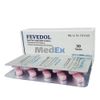
Fevedol
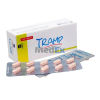
Tramp
Aceta-T
Fapdol
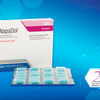
NapaDol
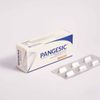
Pangesic
Panol-T
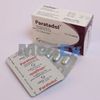
Paratadol
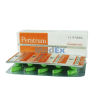
Peratrum
Prodol

Resadol

Syndol Plus
TM Plus
TacsDol
Tamenol
Tempol-D
Trado Plus
Tramatol
Atopen-X
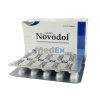
Novodol
Pyrex T

Xcel Max
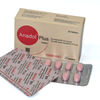
Anadol Plus
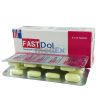
Fastdol
Nordol
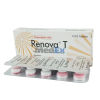
Renova T
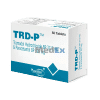
TRD-P
Trixotim
Dolceta

Utracet
Doloran Plus
📖 Official Clinical Monograph
DGDA Approved Prescribing GuidelinesThis tablet is indicated for-
The management of moderate to moderately severe pain in adults.
The short-term (five days or less) management of acute pain.
Dosage & AdministrationFor the management of moderate to moderately severe pain
: The recommended dose is 1 or 2 tablets every 4 to 6 hours as needed for pain relief up to a maximum of 8 tablets per day.
In case of short-term (five days or less) management of acute pain
: The recommended dose is 2 tablets every 4 to 6 hours as needed for pain relief up to a maximum of 8 tablets per day.
This tablet can be administered without regard to food.
Tramadol & Paracetamol combination tablets should not be administered to patients who have previously demonstrated hypersensitivity to tramadol, paracetamol, any other component of this product, or opioids. This is contraindicated in any situation where opioids are contraindicated.
The following adverse reactions may happen to this therapy: asthenia, fatigue, hot flushes, dizziness, headache, tremor, abdominal pain, constipation, diarrhea, dyspepsia, dry mouth, nausea, vomiting, anorexia, anxiety, confusion, euphoria, insomnia, nervousness, somnolence pruritus, rash, increased sweating etc.
Aceta-T preparation may impair mental or physical abilities required for the performance of potentially hazardous tasks such as driving a car or operating machinery.
Aceta-T preparation should not be taken with alcohol containing beverages.
The patient should be instructed not to take Aceta-T preparation in combination with other tramadol or paracetamol-containing products, including over-the-counter preparations.
Aceta-T preparation should be used with caution when taking medications such as tranquilizers, hypnotics or other opiate containing analgesics.
Paracetamol has analgesic and antipyretic properties with weak anti-inflammatory activity. Paracetamol (Acetaminophen) is thought to act primarily in the CNS, increasing the pain threshold by inhibiting both isoforms of cyclooxygenase, COX-1, COX-2, and COX-3 enzymes involved in prostaglandin (PG) synthesis. Paracetamol is a para aminophenol derivative, has analgesic and antipyretic properties with weak anti-inflammatory activity. Paracetamol is one of the most widely used, safest and fast acting analgesic. It is well tolerated and free from various side effects of aspirin.
Tramadol is a centrally acting synthetic opioid analgesic. Although its mode of action is not completely understood, from animal tests, at least two complementary mechanisms appear applicable: binding of parent and M
1
metabolite to μ-opioid receptors and weak inhibition of the reuptake of norepinephrine and serotonin. Opioid activity is due to both low affinity binding of the parent compound and higher affinity binding of the O-demethylated metabolite M
1
to μ-opioid receptors. Tramadol has been shown to inhibit reuptake of norepinephrine and serotonin in vitro, as have some other opioid analgesics.These mechanisms may contribute independently to the overall analgesic profile of tramadol.