 BD Medi
Oxybuprocaine Hydrochloride
 Ocular perioperative drugs
Brands & Prices (3)
📋 Indications & Uses Dosage & Administration⚡ Side Effects & Adverse Reactions🛡️ Warnings & Precautions🔬 Pharmacology & Mechanism
Ocular perioperative drugs
Brands & Prices (3)
📋 Indications & Uses Dosage & Administration⚡ Side Effects & Adverse Reactions🛡️ Warnings & Precautions🔬 Pharmacology & Mechanism
Brand Formulations & Prices
3 brands sorted by unit price
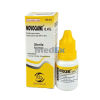

📖 Official Clinical Monograph
DGDA Approved Prescribing GuidelinesUsed to temporarily numb the front surface of the eye so that the eye pressure can be measured or a foreign body removed.
Dosage & AdministrationUse as a 0.4% solution in short ophthalmic procedures. Instil 1 drop into the conjunctival sac to allow tonometry after 60 sec; a further drop after a 90 sec interval produces sufficiReduce systemic absorption by compressing the lacrimal sac at the medial canthus for a minute during and following instillation. Heart block; epilepsy, impaired cardiac conduction, myasthenia gravis; not to be applied to inflamed, infected tissues or damaged mucosa. Protect anaesthetised eye from dust and bacterial contamination; cornea may be damaged by prolonged application. Do not drive until normal vision restored.ent anaesthesia for the fitting of contact lenses; 3 drops at 90 sec intervals produces sufficient anaesthesia after 5 min for a foreign body to be removed from the corneal epithelium or for incision of a meibomian cyst through the conjunctiva.
Hypersensitivity reactions; transient stinging and blurring of vision; excitation of CNS; muscle twitching and tremors; convulsions.
Reduce systemic absorption by compressing the lacrimal sac at the medial canthus for a minute during and following instillation. Heart block; epilepsy, impaired cardiac conduction, myasthenia gravis; not to be applied to inflamed, infected tissues or damaged mucosa. Protect anaesthetised eye from dust and bacterial contamination; cornea may be damaged by prolonged application. Do not drive until normal vision restored.
Oxybuprocaine is a local anaesthetic. It may be less irritating than tetracaine, and the onset and duration of action are similar to tetracaine. Oxybuprocaine binds to sodium channel and reversibly stabilizes the neuronal membrane which decreases its permeability to sodium ions. Depolarization of the neuronal membrane is inhibited thereby blocking the initiation and conduction of nerve impulses.