 BD Medi
Oxcarbazepine
 Adjunct anti-epileptic drugs
Brands & Prices (11)
📋 Indications & Uses Dosage & Administration⚠️ Contraindications⚡ Side Effects & Adverse Reactions🛡️ Warnings & Precautions🔬 Pharmacology & Mechanism
Adjunct anti-epileptic drugs
Brands & Prices (11)
📋 Indications & Uses Dosage & Administration⚠️ Contraindications⚡ Side Effects & Adverse Reactions🛡️ Warnings & Precautions🔬 Pharmacology & Mechanism
Brand Formulations & Prices
11 brands sorted by unit price

Oxcarb XR
Oxetol
Oxipin
Oxetol

Leptal

Oxcarb XR
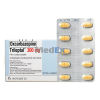
Trileptal
Leptal

Oxcarb XR
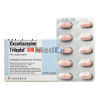
Trileptal
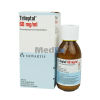
Trileptal
📖 Official Clinical Monograph
DGDA Approved Prescribing GuidelinesLeptal is indicated for:
Adults
: Monotherapy or adjunctive therapy in the treatment of partial seizures
Pediatrics
: Monotherapy in the treatment of partial seizures in children 4-16 years. Adjunctive therapy in the treatment of partial seizures in children 2-16 years.
Dosage & AdministrationAdults
: initiate with a dose of 600 mg/day, given twice-a-day
Adjunctive Therapy
: Maximum increment of 600 mg/day at approximately weekly intervals. The recommended daily dose is 1200 mg/day
Conversion to Monotherapy
: withdrawal concomitant over 3 to 6 weeks;reach maximum dose of Oxcarbazepine in 2 to 4 weeks with increments of 600 mg/day at weekly intervals to a recommended daily dose of 2400 mg/day
Initiation of Monotherapy
: Increments of 300 mg/day every third day to a dose of 1200 mg/day.
Creatinine Clearance <30 mL/min
: Initiate at one half the usual starting dose and increase slowly
Pediatrics
: initiation with 8 to 10 mg/kg/day, given twice-a-day. For patients aged 2 to <4 years and under 20 kg, a starting dose of 16 to 20 mg/kg/day may be considered. Recommended daily dose is dependent upon patient weight.
Adjunctive Patients (Aged 2-16 Years)
: For patients aged 4 to 16 years, target maintenance dose should be achieved over 2 weeks. For patients aged 2 to <4 years, maximum maintenance dose should be achieved over 2 to 4 weeks and should not to exceed 60 mg/kg/day
Conversion to Monotherapy for Patients (Aged 4-16 Years)
: Maximum increment of 10 mg/kg/day at weekly intervals, concomitant antiepileptic drugs can be completely withdrawn over 3 to 6 weeks
Initiation of Monotherapy for Patients (Aged 4-16 Years)
: Increments of 5 mg/kg/day every third day
Oxcarbazepine is contraindicated in patients with a known hypersensitivity to Oxcarbazepine or to any of its components, or to eslicarbazepine acetate.
Clinical trials show that Leptal is better tolerated than carbamazepine. The most common adverse effects were: Central nervous system: dizziness; diplopia; headache, nystagmus; abnormal gait; GI: nausea; vomiting; abdominal pain; Dermatologic: rash; Serum electrolytes: hyponatremia. Bone marrow suppression and hepatotoxicity, associated with carbamazepine, were infrequently reported with Leptal.
Cognitive/neuropsychiatric events (psychomotor slowing, difficulty with concentration, language problems, somnolence or fatigue, ataxia and gait disturbances) were some of common adverse effects associated with Leptal. Cases of asymptomatic hyponatremia were reported. Monitoring of serum sodium levels should be considered if the patient is on other medications known to decrease serum sodium levels or if symptoms of hyponatremia (nausea, malaise, headache, confusion) develop. Patients with a hypersensitivity reaction to carbamazepine should be treated with Leptal only.
The pharmacological activity of Oxcarbazepine is primarily exerted through the 10-monohydroxy metabolite (MHD). The precise mechanism by which Oxcarbazepine and MHD exert their antiseizure effect is unknown; however, in vitro electrophysiological studies indicate that they produce blockade of voltage-sensitive sodium channels, resulting in stabilization of hyperexcited neural membranes, inhibition of repetitive neuronal firing, and diminution of propagation of synaptic impulses. These actions are thought to be important in the prevention of seizure spread in the intact brain. In addition, increased potassium conductance and modulation of high voltage activated calcium channels may contribute to the anticonvulsant effects of the drug. No significant interactions of Oxcarbazepine or MHD with brain neurotransmitter or modulator receptor sites have been demonstrated.