 BD Medi
Nalbuphine Hydrochloride
 Opioid analgesics
Brands & Prices (12)
📋 Indications & Uses Dosage & Administration⚠️ Contraindications⚡ Side Effects & Adverse Reactions🛡️ Warnings & Precautions🔬 Pharmacology & Mechanism
Opioid analgesics
Brands & Prices (12)
📋 Indications & Uses Dosage & Administration⚠️ Contraindications⚡ Side Effects & Adverse Reactions🛡️ Warnings & Precautions🔬 Pharmacology & Mechanism
Brand Formulations & Prices
12 brands sorted by unit price
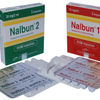
Nalbun DS

Raltrox
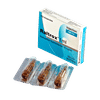
Raltrox
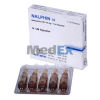
Nalphin
Nalbun
Nalbutin
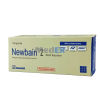
Newbain
Nalphin

Nalbun
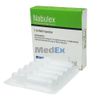
Nabulex
Nalbutin
Nalphin
📖 Official Clinical Monograph
DGDA Approved Prescribing GuidelinesNabulex Injection is indicated for the relief of moderate to severe pain. It is used for relief of moderate to severe pain associated with myocardial infarction (Ml). Nabulex can also be used as a supplement to balanced anesthesia, for preoperative and postoperative analgesia, and for obstetrical analgesia during labor and delivery.
Dosage & AdministrationThe usual recommended adult dose is 10 mg for a 70 kg individual, administered intramuscularly or intravenously; this dose may be repeated every 3 to 6 hours as necessary. Dosage should be adjusted according to the severity of the pain, physical status of the patient, and other medications which the patient may be receiving.
Moderate to severe pain
: by intravenous or intramuscular injection 10-20 mg for 70 kg patient, adjusted as required; child up to 0.3 mg/kg repeated once or twice as necessary.
Preoperative anesthesia
: by intravenous or intramuscular injection 0.1-0.2 mg/kg.
Obstetrical analgesia during labor & delivery
: by intravenous injection 0.3-1 mg/kg over 10-15 minutes with maintenance doses of 0.25-0.5 mg/kg in single intravenous administration as required.
Intraoperative analgesia
: by intravenous injection 0.25 - 0.5 mg/kg at 30 minutes intervals.
Myocardial infarction
: By slow intravenous injection 10-20 mg, repeated after 30 minutes if necessary. Larger dose is required when used as supplement of anesthesia than that required for analgesia.
Children from 18 months to 15 years old
: usually 0.2mg/kg body weight, given preferably by intravenous or intramuscular injection. Maintenance doses may be given at intervals of 4 to 6 hours or the dose must be determined by the physician.
Known hypersensitivity to Nalbuphine Hydrochloride.
Generally Nabulex is well tolerated. However few side-effects like sedation, sweating, nausea, vomiting, dizziness, vertigo, dry mouth, headache, respiratory depression, dyspnea and asthma may be seen.
Caution should be taken in the following conditions: impaired respiration, impaired renal or hepatic function, billiary tract surgery, myocardial infarction and hypotension.
Nalbuphine Hydrochloride is a synthetic potent analgesic. Its analgesic potency is essentially equivalent to that of morphine on a milligram basis. Receptor studies show that Nalbuphine binds to mu, kappa, and delta receptors, but not to sigma receptors. Nalbuphine is primarily a kappa agonist/partial mu antagonist analgesic. The onset of action of Nalbuphine occurs within 2 to 3 minutes after intravenous administration, and in less than 15 minutes following subcutaneous or intramuscular injection. The plasma half-life of Nalbuphine is 5 hours, and in clinical studies the duration of analgesic activity has been reported to range from 3 to 6 hours.