 BD Medi
Monosemicarbazone Adrenochrome
 Anti-fibrinolytic drugs
Brands & Prices (2)
📋 Indications & Uses Dosage & Administration⚠️ Contraindications⚡ Side Effects & Adverse Reactions🛡️ Warnings & Precautions🔬 Pharmacology & Mechanism
Anti-fibrinolytic drugs
Brands & Prices (2)
📋 Indications & Uses Dosage & Administration⚠️ Contraindications⚡ Side Effects & Adverse Reactions🛡️ Warnings & Precautions🔬 Pharmacology & Mechanism
Brand Formulations & Prices
2 brands sorted by unit price
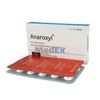
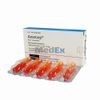
📖 Official Clinical Monograph
DGDA Approved Prescribing GuidelinesAnaroxyl is indicated in the prevention and treatment of surgical and non-surgical capillary bleedings.
Dosage & AdministrationFor the prevention and treatment of capillary bleedings, accordingly to the severity of the case, 4-12 tablets divided over the day, preferably one hour before meals. Prior to surgery, medication is started on the preceding evening, either orally or by intramuscular or subcutaneous injection of usually 1.5-5 mg. In addition, an injection is given about half an hour before the surgical intervention.
Injection solution should be administered by intramuscular or subcutaneous route; in emergency cases the injections may be given intravenously. The tablets should be taken orally.
There are no known contraindications.
No adverse reactions have been reported at the recommended dosages.
Because of the content of diprophylline (90 mg/ml), the dosage of the 5 mg/ml injection preparation to premature babies, infants and young children should not exceed 0.3 ml.
Adrenochrome Monosemicarbazone is a haemostatic with a rapid onset of action. It contains a water soluble form of adrenochrome monosemicarbazone, a stable derivative of adrenochrome as the active substance. Adrenochrome is an oxidation product of adrenaline; it reduces normal and pathologic bleeding time by decreasing capillary permeability. It produces capillary haemostatis without exerting any of the adrenergic actions on respiration or cardiovascular system. Thus, despite its adrenaline like action on small blood vessels, does not give rise to the general systemic effects of sympathomimetic drugs.