 BD Medi
Levodopa + Carbidopa
 Antiparkinson drugs
Brands & Prices (27)
📋 Indications & Uses Dosage & Administration⚠️ Contraindications⚡ Side Effects & Adverse Reactions🛡️ Warnings & Precautions🔬 Pharmacology & Mechanism
Antiparkinson drugs
Brands & Prices (27)
📋 Indications & Uses Dosage & Administration⚠️ Contraindications⚡ Side Effects & Adverse Reactions🛡️ Warnings & Precautions🔬 Pharmacology & Mechanism
Brand Formulations & Prices
27 brands sorted by unit price
Levopa
Dopair
Twindopa
Dopair
Aldopa
Carlev

Co-dopa
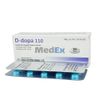
D-Dopa
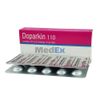
Doparkin
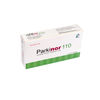
Parkinor
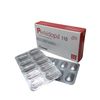
Perkidopa

Synamet
Syndopa

Twindopa
Levopa
D-Dopa
Synamet
Twindopa
Carlev
Co-dopa
Dopair
Doparkin
Perkidopa
Synamet
Twindopa
Syndopa
Aldopa
📖 Official Clinical Monograph
DGDA Approved Prescribing GuidelinesAldopa tablet is indicated for the treatment of Parkinson's disease and syndrome. It is useful in relieving many of the symptoms of parkinsonism, particularly rigidity and bradykinesia. This tablet is frequently helpful in the management of tremor, dysphagia, sialorrhea and postural instability associated with Parkinson's disease and syndrome. Levodopa plus carbidopa before physiotherapy increases motor recovery after stroke.
Dosage & Administration100/10 mg tablet
: Dosage may be initiated with one tablet three or four times a day. Titration upward may be required in some patients to achieve optimum dosage of carbidopa. The dosage may be increased by one tablet every day or every other day until a total of eight tablets (two tablets q.d.s.) is reached.
250/25 mg tablet
: The initial dose is one half taken once or twice daily. However, this may not provide the optimal amount of Carbidopa needed by many patients. If necessary, add one-half every day or every other day until optimal response is reached. The suggested starting dosage for most patients taking more than 1500 mg of Levodopa a day is one tablet of 250/25 mg three or four times a day.
100/25 mg tablet
: When Levodopa 100 mg & Carbidopa 25 mg tablet is used, dosage is initiated with 1 tablet of Levodopa 100 mg & Carbidopa 25 mg tablet, 3 times a day. This dosage schedule provides 75 mg of carbidopa per day. Dosage may be increased by 1 tablet every day or every other day, as necessary, until a dosage of 8 tablets of Levodopa 100 mg &
Carbidopa 25 mg a day is reached.
50/12.5 mg tablet
: One tablet three or four times a day
Maintenance dose
: Therapy should be individualized and adjusted according to the desired therapeutic response. When more levodopa is requried, 250/25 mg tablet should be substituted at a dosage of one tablet three or four times a day. If necessary, the dosage of 250/25 mg tablet may be increased by half to one tablet every other day to a maximum of eight tablets a day. Experience with a total daily dosage greater than 200 mg Carbidopa is limited.
Carbidopa-Levodopa tablet is contraindicated in patients with hypersensitivity to Carbidopa and Levodopa, and in patients with narrow-angle glaucoma. Since Levodopa may activate a malignant melanoma, Carbidopa-Levodopa should not be used in patients with suspicious undiagnosed skin lesions or a history of melanoma.
Adverse effects that occur frequently in patients receiving Carbidopa-Levodopa are those due to the central neuropharmacologic activity of dopamine. These reactions usually can be diminished by dosage reduction. The most common adverse effects are dyskinesias including choreiform, dystonic, and other involuntary movements and nausea.
Body as a whole
: syncope, chest pain, anorexia.
Cardiovascular
: palpitation, orthostatic effects including hypotensive episodes, hypertension, phlebitis.
Gastrointestinal
: vomiting, gastrointestinal bleeding, development of duodenal ulcer, diarrhoea, dark saliva.
Haemotologic
: leukopenia, haemolytic and non-haemolytic anaemia, thrombocytopenia, agranulocytosis.
Hypersensitivity
: angioedema, urticaria, pruritus, Henoch-Schonlein purpura.
Nervous System
: dizziness, somnolence, paresthesia, delusions, hallucinations and paranoid ideation, depression with or without development of suicidal tendencies, dementia, dream abnormalities, agitation, confusion, increased libido.
Respiratory
: dyspnea.
Skin
: alopecia, rash, dark sweat.
Urogenital
: dark urine.
Carbidopa-Levodopa is not recommended for the treatment of medicine-induced extrapyramidal reactions. Carbidopa Levodopa may be given to patients already taking Levodopa alone; however, the Levodopa must be discontinued at least 12 hours before Carbidopa-Levodopa started. Dyskinesias may occur in patients previously treated with Levodopa alone because Carbidopa permits more Levodopa to reach the brain and, thus, more dopamine to be formed. The occurrence of dyskinesias may require dosage reduction. All patients should be observed carefully for the development of depression with concomitant suicidal tendencies. Patients with past or current psychoses should be treated with caution. Carbidopa-Levodopa should be administered cautiously to patients with severe cardiovascular or pulmonary disease, bronchial asthma, renal, hepatic or endocrine disease, or a history of peptic ulcer disease or of convulsions.
Care should be exercised to patients with a history of myocardial infarction who have atriai, nodal, or ventricular arrhythmia. In such patients, cardiac function should be monitored with particular care during the period of initial dosage administration and titration. Patients with chronic wide-angle glaucoma may be treated cautiously with Carbidopa-Levodopa, provided the intraocular pressure is weli controlled and the patient monitored carefully for changes in intraocular pressure during therapy.
Levodopa, the metabolic precursor of dopamine, crosses the blood-brain barrier and is converted to dopamine in the brain. Carbidopa is a dopa decarboxylase (DDC) inhibitor which reduces the peripheral metabolism of Levodopa to dopamine, and thus, more Levodopa becomes available to the brain.
Levodopa
: Levodopa is the metabolic precursor of dopamine, does cross the blood-brain barrier, and presumably is converted to dopamine in the brain. This is thought to be the mechanism whereby levodopa relieves symptoms of Parkinson's disease.
Carbidopa
: When levodopa is administered orally, it is rapidly decarboxylated to dopamine in extracerebral tissues so that only a small portion of a given dose is transported unchanged to the central nervous system. Carbidopa inhibits the decarboxylation of peripheral levodopa, making more levodopa available for delivery to the brain.