 BD Medi
Budesonide + Glycopyrronium Bromide + Formoterol Fumarate
 Combined bronchodilators, Respiratory corticosteroids
Brands & Prices (1)
📋 Indications & Uses Dosage & Administration⚠️ Contraindications⚡ Side Effects & Adverse Reactions🛡️ Warnings & Precautions🔬 Pharmacology & Mechanism
Combined bronchodilators, Respiratory corticosteroids
Brands & Prices (1)
📋 Indications & Uses Dosage & Administration⚠️ Contraindications⚡ Side Effects & Adverse Reactions🛡️ Warnings & Precautions🔬 Pharmacology & Mechanism
Brand Formulations & Prices
1 brands sorted by unit price
📖 Official Clinical Monograph
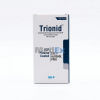
DGDA Approved Prescribing GuidelinesTrionid inhaler is indicated for the maintenance treatment in patients with Chronic Obstructive Pulmonary Disease (COPD). It is not indicated for the relief of acute bronchospasm.
Dosage & AdministrationRoute of Administration
: For oral inhalation only.
Recommended doses
: 2 inhalations twice daily in the morning and the evening. The maximum dose is two inhalations twice daily. After inhalation, the patient should rinse the mouth with water without swallowing.
It is contraindicated in patients who have demonstrated hypersensitivity to Budesonide, Formoterol Fumarate, Glycopyrronium, or any of the excipients.
The most common side effects include upper respiratory tract infection, pneumonia, back pain, oral candidiasis, influenza, muscle spasms, urinary tract infection, cough, sinusitis, and diarrhea.
This inhaler is not indicated to be used for the relief of acute symptoms (as rescue therapy for the treatment of acute episodes of bronchospasm). The daily dosage should not be increased beyond the recommended dose. Patients should not use another medicine containing a LABA (Salmeterol, Formoterol Fumarate, Arformoterol Tartrate, or Indacaterol) for any reason. Caution should be exercised when considering the co-administration with long-term Ketoconazole, and other known strong CYP3A4 inhibitors (Ritonavir, Atazanavir, Clarithromycin, Indinavir, Itraconazole, Nefazodone, Nelvfinavir, Saquinavir, Telithromycin). Since patients with COPD often have multiple risk factors for reduced BMD, assessment of BMD is recommended before initiating Trionid and periodically thereafter.
This is a combination of Budesonide, Glycopyrronium Bromide and Formoterol Fumarate Dihydrate. Budesonide is a corticosteroid that reduces the swelling and irritation in the lungs. Formoterol and Glycopyrronium are long-acting bronchodilators that act in different ways to relax muscles in the airways, helping to open the airways wider and allowing to breathe more easily to prevent symptoms, such as wheezing, cough, chest tightness, and shortness of breath.