 BD Medi
Amlodipine Besilate + Telmisartan
 Combined antihypertensive preparations
Brands & Prices (49)
📋 Indications & Uses Dosage & Administration⚠️ Contraindications⚡ Side Effects & Adverse Reactions🛡️ Warnings & Precautions🔬 Pharmacology & Mechanism
Combined antihypertensive preparations
Brands & Prices (49)
📋 Indications & Uses Dosage & Administration⚠️ Contraindications⚡ Side Effects & Adverse Reactions🛡️ Warnings & Precautions🔬 Pharmacology & Mechanism
Brand Formulations & Prices
49 brands sorted by unit price
Prestel
Presart AM

Telmidip
Telsar AM
Telmicon-M
Telmidip
Telnocal
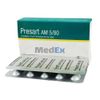
Presart AM
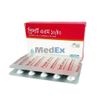
Presart AM
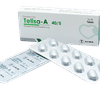
Telisa-A
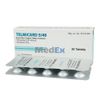
Telmicard 5/40
Telmidip

Temcard-A
Trusert A
Arbitel AM

Camlotel
Cardotel

Teana AM

TelAmlo

Telmacal

Telmitan Max

Telmivas AM

Telpro Max
Tems A

Teslar-M

Telmidip
Presart AM
Telmitan Max
Telnocal
Telmacal

Telmicard 5/80
Telisa-A
Trusert A
Temcard-A
Arbitel AM
Camlotel
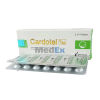
Cardotel
Teana AM
TelAmlo
Telmacal
Telmicon-M
Telmitan Max

Telmivas AM
Telpro Max
Telsar AM
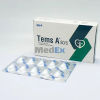
Tems A
Teslar-M
Telmitan Max
Telmacal
📖 Official Clinical Monograph
DGDA Approved Prescribing GuidelinesArbitel AM is indicated for the treatment of hypertension, alone or with other antihypertensive agents. It may also be used as initial therapy in patients who are likely to need multiple drugs to achieve their blood pressure goals.
Dosage & AdministrationInitial Therapy
: Patient may be initiated on this tablets if it is unlikely that control of blood pressure would be achieved with a single agent. The usual starting dose is 40/5 mg once daily. Patients requiring larger blood pressure reductions may be started with 80/5 mg once daily. Initial therapy with this is not recommended in patients 575 years old or with hepatic impairment.
Add-on Therapy
: Patients not adequately controlled with amiodipine (or another dihydropyridine calcium channel blocker) alone or with telmisartan (or another angiotensin receptor blocker) alone. Patients treated with 10 mg amiodipine who experience adverse reactions such as edema, may be switched to this 40/5 mg tablets once daily, reducing the dose of amiodipine without reducing the overall expected antihypertensive response.
Replacement Therapy
: Patients receiving amiodipine and telmisartan from separate tablets may instead receive this tablets containing the same component doses once daily. Dosage must be individualized and may be increased after at least 2 weeks. The maximum recommended dose of this tablet is 80/10 mg once daily.
Known hypersensitivity to this product or any of its components.
Pregnancy & lactation.
Biliary obstructive disorders, severe hepatic impairment, hypotension, cardiogenic shock, left ventricle outflow tract obstruction.
Dizziness, peripheral edema, migraine, headache, paraesthesia, vertigo, bradycardia, palpitations, hypotension, cough, abdominal pain, diarrhea, nausea, pruritus, myalgia, spasm, erectile dysfunction,chest pain, fatigue, edema etc.
Avoid fetal or neonatal exposure
Hypotension: Correct any volume or salt depletion before initiating therapy. Observe for signs and symptoms of hypotension
Titrate slowly in patients with hepatic or severe renal impairment
Heart failure: Monitor for worsening
Avoid concomitant use of an ACE inhibitor and angiotensin receptor blocker
Myocardial infarction: Uncommonly, initiating a CCB in patients with severe obstructive coronary artery disease may precipitate myocardial infarction or increased angina.
This is a fixed dose combination of Telmisartan and Amiodipine. Telmisartan, a non-peptide angiotensin receptor blocker (ARB), is specific angiotensin II antagonist acting on the AT1 subtype. Angiotensin II is the principal pressor agent of the renin-angiotensin system, with effects that include vasoconstriction, stimulation of synthesis and release of aldosterone, cardiac stimulation, and renal reabsorption of sodium, which leads to an increase in blood pressure (hypertension). Telmisartan blocks the vasoconstrictor and aldosterone-secreting effects of angiotensin II by selectively blocking the binding of angiotensin II to the AT1 receptor in many tissues, such as vascular smooth muscle and the adrenal gland. Therefore, Telmisartan dilates blood vessels and reduces blood pressure without affecting pulse rate. Telmisartan has much greater affinity (>3,000 fold) for the AT1 receptor than for the AT2 receptor. It does not bind or block other hormone receptors or ion channels known to be important in cardiovascular regulation.
Amiodipine, a dihydropyridine calcium-channel blocker (CCB), inhibits the transmembrane influx of calcium ion into vascular smooth muscle and cardiac muscle. Amiodipine is a peripheral arterial vasodilator that acts directly on vascular smooth muscle to cause a reduction in peripheral vascular resistance and reduction in blood pressure.